How Earlybird uses Avrea for faster CI

Earlybird’s engineering team uses Avrea for faster CI across 17 applications and services. Agents do most of the coding, and fast build and test results let them find and fix mistakes while they work.
What changed
-
Removing one setup step would save about 67 runner-hours at the observed 30-day run volume
-
Parallel builds reuse cached layers and task outputs on fresh Avrea runners
About Earlybird
Earlybird is a venture capital firm. Its engineering team maintains 17 applications and services, including the tools its investment team uses.
- Industry
- Venture capital
- CI stack
- GitHub Actions, Avrea runners, Docker Buildx Bake, Turborepo
“Agents do most of the implementation now. I design the architecture and build the checks that keep their work consistent with it. Our CI gives agents clear feedback so they can fix mistakes as they work. Avrea helped us make that feedback fast and reliable.”
Why Earlybird changed the build before switching runners
Earlybird used Dagger to define its pipelines in typed code and run them locally. When our engineers reviewed the proposed move with Earlybird, we found that each application had about 60 GB of Dagger cache tied to a persistent disk. A build on a fresh runner would have to transfer that state to reuse the work from a previous run.
Earlybird rewrote its pipeline in TypeScript, ran it with Bun, and moved its container builds to Docker Buildx Bake. Build layers now live in a registry cache, and Turborepo caches task outputs. A fresh Avrea runner can reuse the layers and outputs it needs without restoring the whole Dagger cache.
What runs when an agent changes a shared package
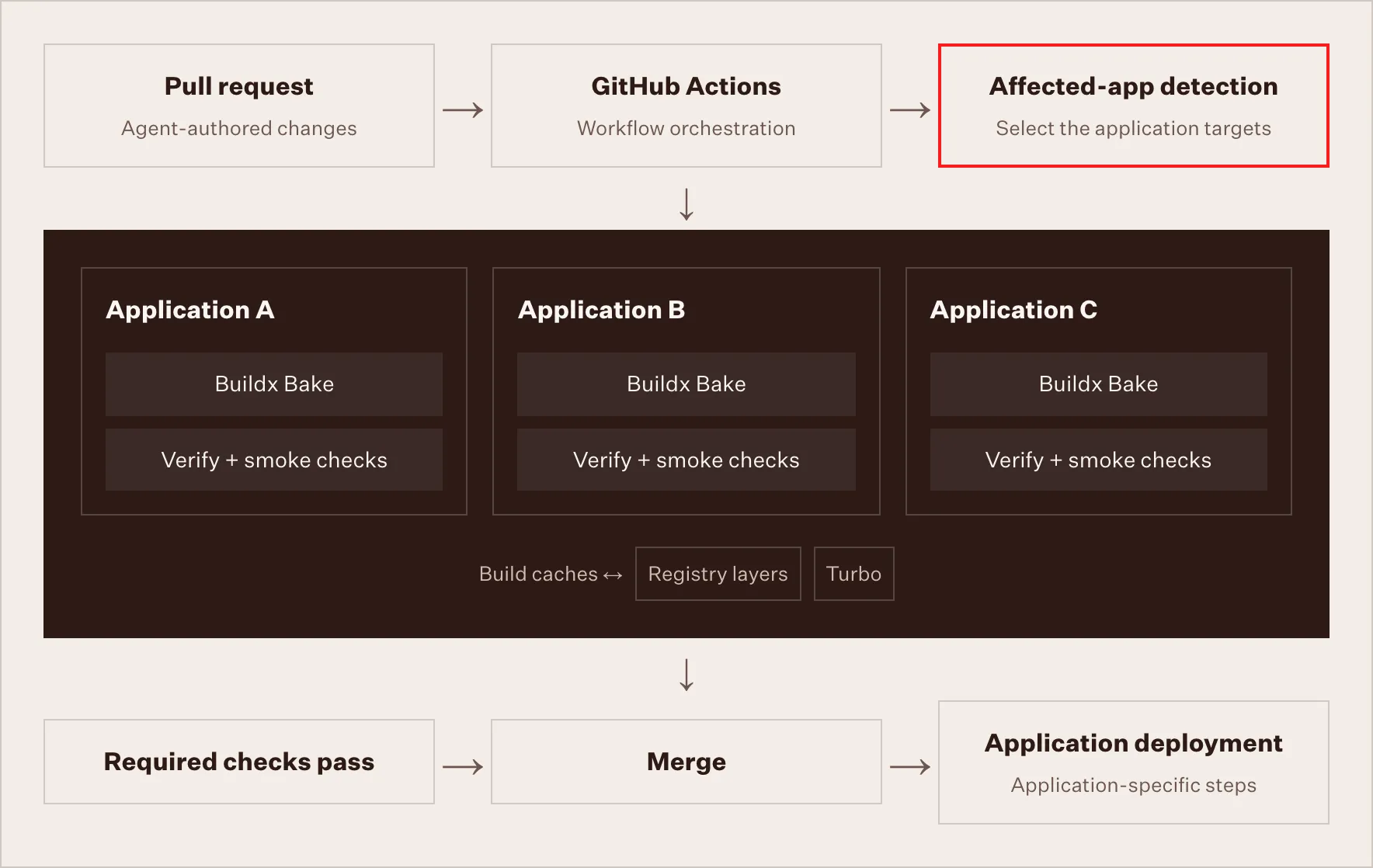
An agent can change a shared package without touching the source of any application that imports it. Earlybird’s workflow follows those dependencies to decide which applications to rebuild. GitHub Actions runs their builds and smoke checks in parallel on Avrea. If one application fails its checks, the agent has a specific failure to work on before the pull request can merge.
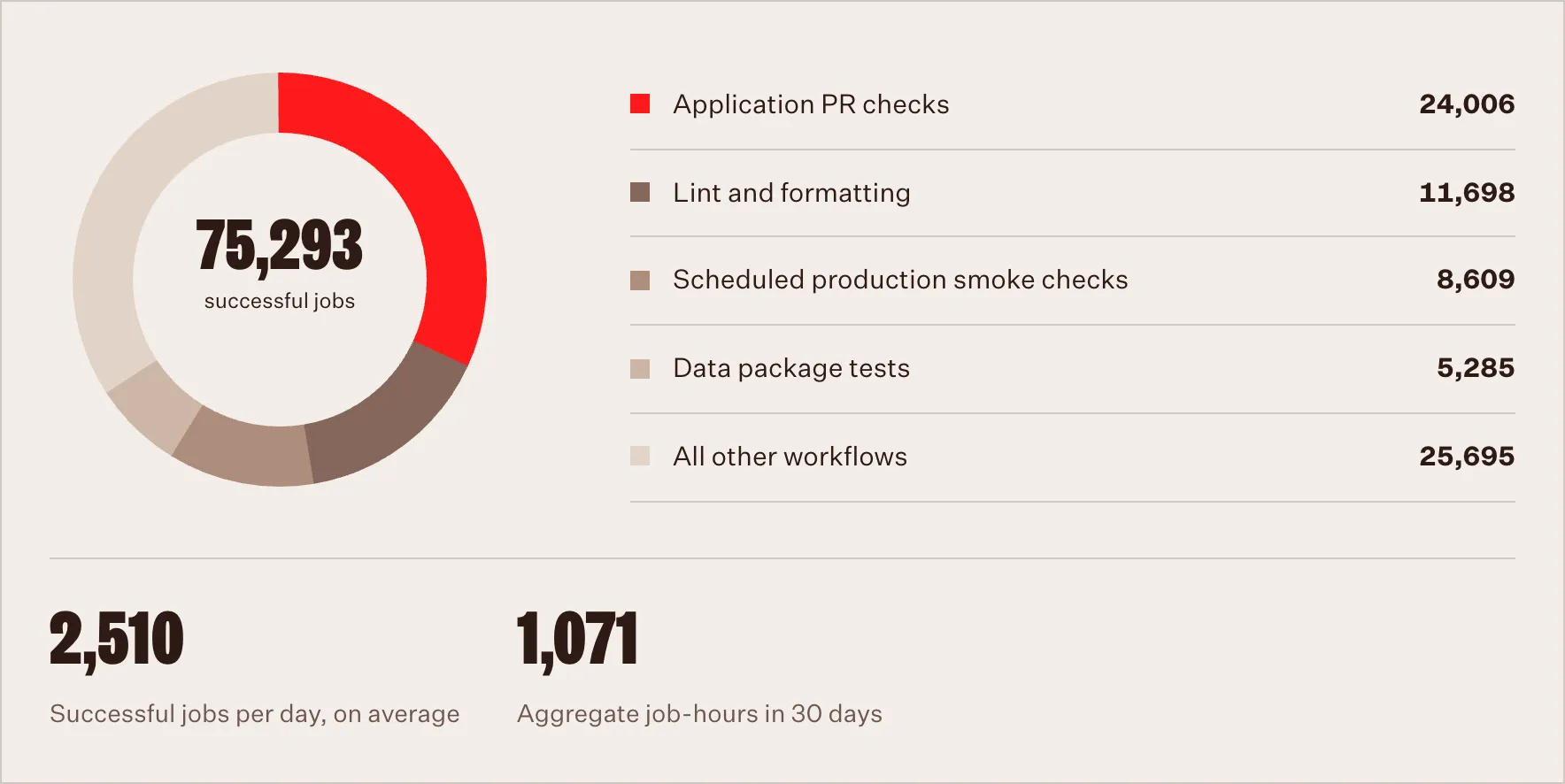
Earlybird merged 341 pull requests in 30 days. Over that period, 75,293 CI jobs completed successfully. That workload included scheduled smoke checks against production as well as the builds and tests triggered by pull requests.
How Earlybird estimated the saving from one setup step
Looking at step timings in Avrea, Earlybird found that a recurring quality check spent an average of 3 minutes 54 seconds on a single setup action. The check no longer needed it, so the team removed it.
Earlybird multiplied the action’s historical average runtime by the number of times the check ran over 30 days. At that volume, skipping the action would save about 67 hours of runner time.
Earlybird’s next step is to move its workflows to Avrea CI so its agents get feedback even faster.
Earlybird is an investor in Avrea. Both graphics are from Earlybird’s engineering team.